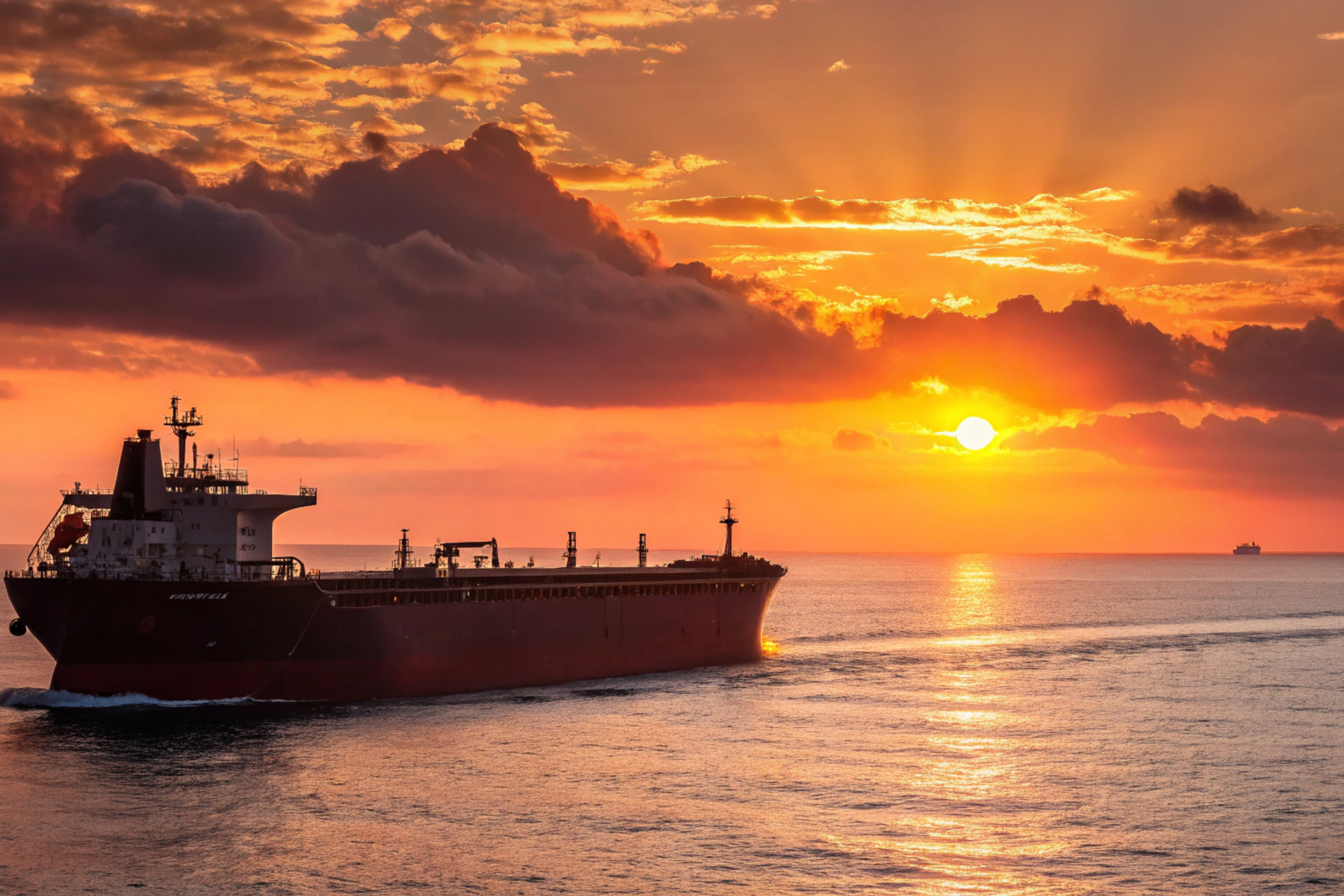
The Day the Sea Lanes Blinked
There is something quietly reassuring about global shipping.
Ships leave. Ships arrive. Cargo moves. Prices fluctuate, but the system, vast, invisible, improbably coordinated, keeps going. It has the feel of permanence. Not because it is simple, but because it has worked for so long that people have stopped questioning whether it might not.
For years, the global economy has relied on a quiet assumption that rarely made it into formal risk models but sat at the heart of how trade actually functions: that the world’s key maritime chokepoints would remain open, regardless of the level of geopolitical tension surrounding them.
It wasn’t that disruption was impossible. It was that it was always assumed to be temporary, containable, and ultimately reversible. That assumption is now under strain.
The effective paralysis of the Strait of Hormuz is not just another episode in the long history of Middle Eastern instability. It is something more uncomfortable. It is a reminder that the system of global trade that has been built over decades is not as robust as it appears, and that its most critical arteries are also its most exposed.
This is not the first warning. It is simply the one that is hardest to ignore.
Back in March 2021, when the Suez Canal was blocked by the grounding of the Ever Given, the immediate reaction was disbelief. A single ship had managed to halt nearly 12% of global trade. For six days, one of the world’s most important waterways became unusable because of a navigational error and a strong gust of wind. At the time, the explanation was comforting. A freak incident. Bad luck. A once-in-a- generation mishap that made for good headlines and better memes, but did not fundamentally change anything.
Except, of course, it did not just immediately.
What the Suez incident revealed, beneath the spectacle, was something structural: that efficiency had come at the cost of redundancy. There were no easy alternatives. The system worked exceptionally well until it didn’t.
What followed in the Red Sea was less theatrical and more unsettling.
There was no singular moment to point to. No image of a vessel wedged impossibly across a canal, no neat before-and-after. Instead, there was a pattern of targeted disruptions. Commercial vessels were attacked. Some were hit. Some were sunk. Lives were lost, quietly absorbed into the background of global trade.
The threat was intermittent. But it did not need to be constant to be effective. It only needed to be credible. Because shipping, for all its steel and scale, does not run on machinery alone. It runs on judgment, based on continuous, evolving risk calculations.
And that calculation began to change.
Ships were not barred from the Bab El-Mandeb Strait. The route remained open on paper. But increasingly, operators looked at the same stretch of water and arrived at a different conclusion: not that they couldn’t pass, but that they shouldn’t.
The shift was neither universal nor immediate. It rarely is. The largest container lines, highly exposed to schedule disruption and reputational risk, stepped back first. Others, operating under different commercial pressures or flags, continued.
The route didn’t close. It split.
On charts, it remained intact. In practice, its utility became selectively accessible, defined more by each operator’s tolerance for uncertainty than by geography.
For those who rerouted, the costs were immediate and measurable. Diverting around the Cape of Good Hope added roughly 3,500 nautical miles to the Asia– Europe run, translating into 10 to 14 extra days at sea and a corresponding rise in fuel consumption. On some voyages, bunker costs alone increased by six figures and often significantly more.
War-risk insurance premiums, negligible on this corridor for much of the past decade, became volatile, quoted per transit and recalibrated voyage by voyage, rising to roughly 0.3% to 1% of hull value at peak, with some underwriters citing rates above that. For large vessels, that translated into hundreds of thousands of dollars for a single passage.
Freight markets responded just as quickly. Asia–Europe spot rates surged, doubling and, on some lanes, tripling within weeks. But these increases did not simply mirror higher costs. Capacity tightened, schedules fragmented, and the market began pricing risk, not just distance.
These costs were not absorbed in any simple sense. They were redistributed, repriced, and, where possible, passed through. Because the underlying equation had changed, not just what it cost to move cargo, but what it meant to move it at all.
Risk, once theoretical, had become operational.
And that was enough.
Now, Hormuz has taken that process one step further.
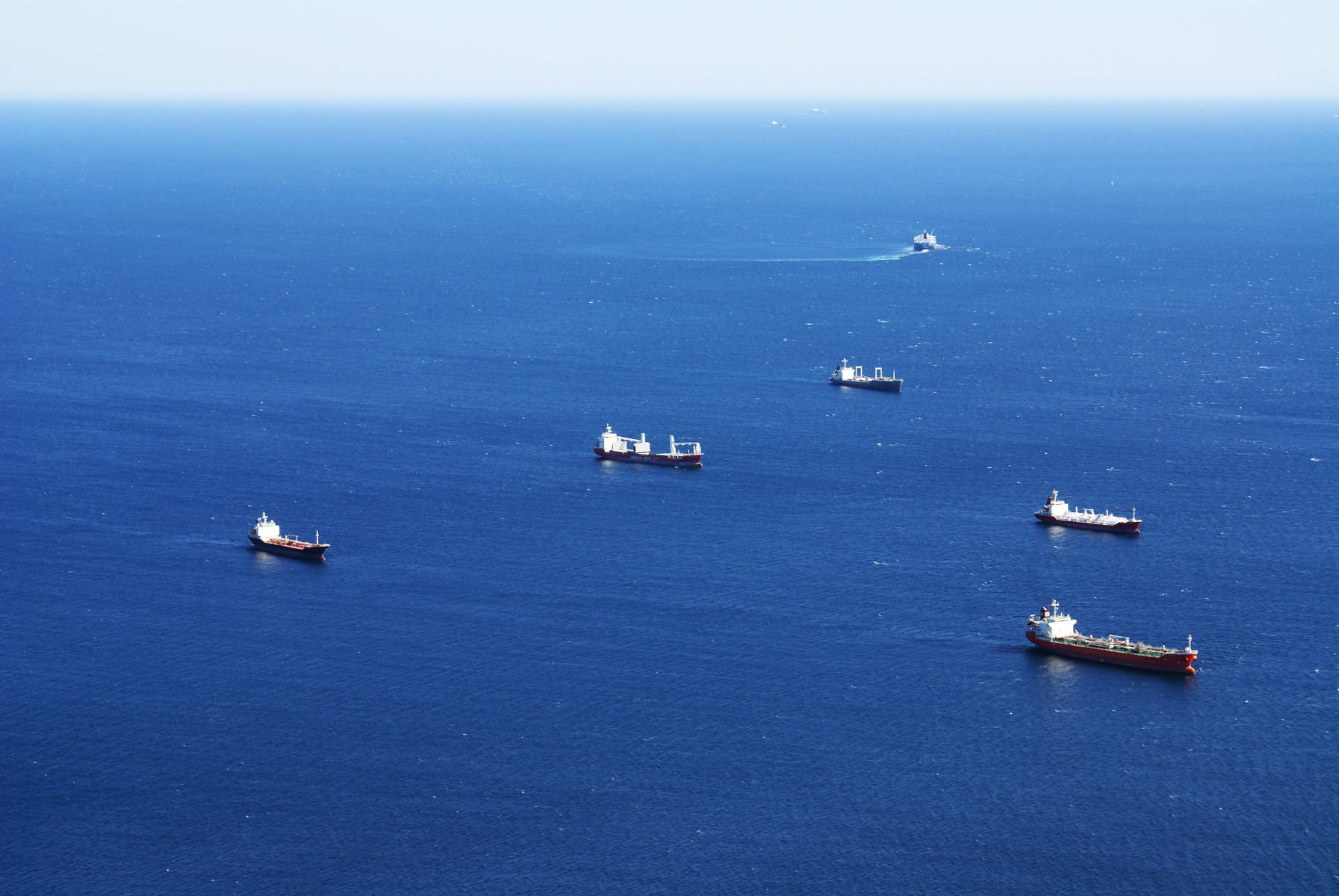
Unlike Suez, this is not an accident. Unlike the Red Sea, it is not limited to asymmetric disruption. It is the result of state-level conflict intersecting with one of the world’s most critical energy corridors. The response from operators has not been uniform silence. It has been a more complex recalibration: vessels clustering outside the strait in holding patterns, waiting for intelligence updates; cargoes deferred or renegotiated; some fixtures cancelled outright; others repriced to reflect a corridor premium that did not exist six months ago. Traffic has not stopped so much as it has hesitated, and in a system built on schedule and cadence, hesitation carries its own cost.
The consequences are correspondingly larger. A meaningful share of the world’s energy supply flows through this narrow passage, including roughly 20% of globally traded LNG. Its disruption is not just a logistical problem; it is a structural one, with immediate implications for energy markets, pricing, and geopolitical leverage.
But the underlying lesson is the same.
The global system is more concentrated than it should be.
For decades, global trade has been organised around efficiency.
The shortest routes were chosen. The busiest hubs expanded. The system became faster, cheaper, and more tightly optimised. Over time, those efficiencies compounded, and what began as a series of choices came to feel inevitable.
But there is nothing inevitable about it.
Trade routes are not natural features. They are constructed and shaped by economics, geography, and politics. And when any one of those variables shifts, whether through an accident, a drone attack, or a military escalation, the route itself becomes uncertain.
Individually, recent disruptions can be explained.
A canal blocked by a single vessel. A strait disrupted by non-state actors. Another, more critical passage affected by open conflict.
Accident. Intent. Escalation. Together, they are harder to ignore. They are beginning to form a pattern.
The immediate effects are visible.
War-risk premiums rise. Freight markets adjust. Voyages lengthen. Fuel consumption increases. Distance, which globalisation has spent decades trying to compress, returns quietly.
But the deeper impact is less tangible. It lies in the gradual erosion of confidence that underpins the entire system.
Shipping runs on trust in a way that is easy to overlook. Cargo moves because it is assumed it will arrive. Contracts are signed because routes are expected to remain open. Financing flows because the system appears predictable.
When that trust weakens, nothing stops immediately.
Instead, everything hesitates. Decisions take longer. Margins widen. Assumptions are questioned.
It is less like a crash and more like a pause.
And in a system built on movement, hesitation is not a small thing.
This shift is no longer confined to operations. It is beginning to restructure capital.
Investors, insurers, and lenders are quietly recalibrating their thinking about maritime risk, and the changes are more structural than they appear. War-risk underwriters, who had priced corridor exposure as a secondary consideration for most of the past decade, are now treating it as a primary variable. Premiums that
were once predictable and modest have become volatile and corridor-specific. In some cases, cover has become discretionary rather than automatic.
Lenders are following the same logic. Assets tied to single trade lanes carry different collateral assumptions than those with genuine route optionality. Term sheets are beginning to reflect this, not dramatically, but noticeably. The haircut is quiet. But it is there.
Port infrastructure decisions, storage positioning, fleet deployment strategies, all of it is being reconsidered through a lens that was largely absent from planning conversations five years ago. The question is no longer only what a vessel earns. It is where it can earn it, and whether that answer might change.
Routes once treated as constants are now variables. And capital, like shipping, follows confidence.
When confidence becomes conditional, so does investment.
There is, of course, a tendency to assume that normality will return. It usually does, at least in a functional sense. The straits will reopen. Ships will transit. Cargo will flow. Markets will stabilise.
But normality is not the same as restoration.
After Suez, traffic resumed, but no one quite forgot how easily it had stopped. After the Red Sea disruptions, rerouting became less unthinkable and more routine. And when Hormuz reopens, as it almost certainly will, it will carry with it a different kind of awareness.
Not panic. Not even fear. Just the quiet understanding that something once taken for granted can no longer be.
The maritime system has always been resilient. It adapts, it reroutes, it absorbs shocks with a kind of understated competence that rarely makes headlines. But resilience is not the same as invulnerability.
What the past few years have shown first in Suez, then in the Red Sea, and now in Hormuz, is not that the system is broken.
It is that it was never as unbreakable as it seemed.
The sea lanes have not disappeared. They have simply blinked.
And the industry that finances, insures, and operates within them is beginning to price that fact accordingly.
Read more